

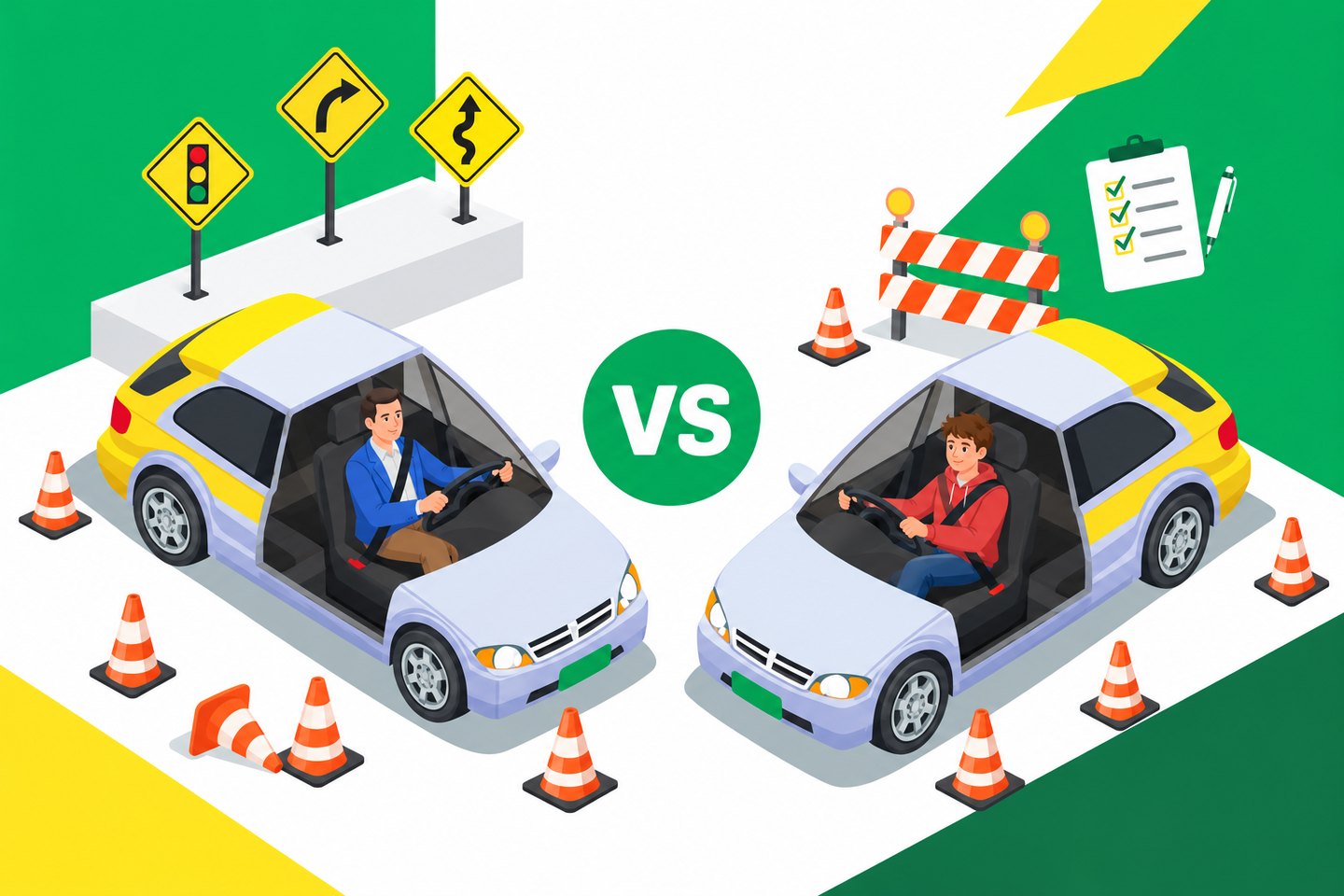
Learning to Drive as an Adult in Ontario: What's Different From Learning as a Teen
Learning to drive as an adult in Ontario is different from learning as a teen mainly in pace, pressure, and prior experience, not in the licensing rules themselves, which are the same graduated system for every new driver regardless of age. Adult students usually pick up vehicle control faster thanks to years spent as a passenger and often need fewer total lessons, while the real work is building confidence and unlearning old assumptions about the road. This guide breaks down what actually changes between learning to drive as an adult and learning as a teen, and what stays exactly the same.
Key takeaways
- The G1-G2-G licensing process is identical for adult and teen learners in Ontario.
- Adults usually need fewer in-car lessons but more deliberate confidence-building.
- A BDE course still shortens the waiting period between stages and qualifies for an insurance discount at any age.
- Flexible scheduling (evenings, weekends, intensive blocks) matters more for working adults than for teens.
- Drivers 19 or older who have held a G1 for at least 12 months may be able to combine the G2 and G road tests into a single exit test.
Is Learning to Drive as an Adult Harder Than Learning as a Teen?
Not harder, different. Adult learners bring a few extra complications: years of being a nervous passenger instead of a driver, habits picked up from watching other people drive, a tighter schedule, and sometimes more anxiety about making mistakes in front of other road users. But adults also bring real advantages, including stronger judgment, better impulse control, and more experience weighing risk in everyday situations. Teens often need more repetition to build basic mechanical skills, like consistent mirror checks and steering control. Adult learners typically need more targeted work on relaxing into the skill and trusting their own decisions behind the wheel.
Do Adults Follow the Same G1, G2, G Licensing Steps as Teens?
Yes. Ontario's graduated licensing system applies to new drivers of any age, there is no separate "adult" licence path. Every new driver starts with the G1 knowledge test, then must hold a G1 for at least 12 months (or 8 months with an MTO-approved BDE course) before qualifying for the G2 road test, and must then hold a G2 for at least 12 months (or 8 months with BDE) before qualifying for the full G road test. One option that mostly applies to adult learners: drivers who are 19 or older when they hold a valid G1 for at least 12 months may be able to combine the G2 and G road tests into one exit test, rather than holding a separate G2 licence first. The pass requirements and test content are the same either way, it simply changes how the stages are scheduled, not what a driver needs to demonstrate.
How Many Driving Lessons Does an Adult Beginner Need?
There's no fixed number, and it varies by comfort level, but adult beginners often need fewer total lessons than teens because they recognize hazards faster and tend to stay more focused during a lesson. The MTO's BDE requirement itself doesn't change with age: it's 20 hours of in-class or online instruction plus 10 hours of in-car training for every student. Beyond that minimum, many adult learners choose a shorter run of more intensive lessons, a few sessions a week over a month or two, rather than the slower, once-a-week pace that works better for a teen still building basic car control.
What Makes Adult Driving Lessons Feel Different From Teen Lessons?
Adult lessons are usually built around a work schedule rather than a school schedule, which means more evening and weekend availability matters. There's no parental supervision requirement to plan around, and the motivation is typically self-directed , an adult learner is usually booking lessons because they need a licence for a job, a move, or a family responsibility, not because a parent signed them up. Instructors who work regularly with adult learners also tend to adjust their tone: less correction for correction's sake, more collaborative problem-solving, and more attention to talking through the "why" behind a maneuver rather than just repeating it.
How Can Adult Learners Build Confidence Behind the Wheel?
Start by treating nervousness as normal rather than a sign something is wrong, most adult learners feel it, especially in the first few lessons. Practising in low-stress settings first, like an empty parking lot or a quiet residential street, before adding highway merging or busy intersections, helps build skill in layers instead of all at once. Choosing an instructor who regularly teaches adult students (rather than one who mainly works with teens) also helps, since the pacing and feedback style will already be tailored to an adult learner's starting point. A structured BDE curriculum gives that progression built in, instead of leaving it to chance.
Frequently Asked Questions
Is it harder to learn to drive as an adult than as a teen?
It isn't harder, just different, adult learners usually need less time on basic vehicle control and more time building confidence and unlearning passenger-seat habits.
Do adults still need to go through G1, G2, and G in Ontario?
Yes. Every new driver in Ontario, regardless of age, must go through the same graduated licensing system starting with a G1 knowledge test.
Can adults skip the G2 stage in Ontario?
Drivers who are 19 or older and have held a G1 for at least 12 months may be able to combine the G2 and G road tests into a single exit test instead of holding a separate G2 licence first.
How many driving lessons does an adult beginner usually need?
It varies by comfort level, but many adult beginners need fewer total lessons than teens; the MTO still requires 20 hours of classroom instruction and 10 hours of in-car training for a BDE course regardless of age.
Is a BDE course worth it for adult learners?
Yes, a BDE course shortens the wait before a road test and can qualify a new driver of any age for a car insurance discount once they're fully licensed.
Does learning to drive later in life affect insurance rates?
Insurance is based mainly on licensing status and driving history rather than the age at which someone first learned, though completing a BDE course can help lower rates for new drivers at any age.
Ready to get started as an adult learner? See course options and pricing on our Programs and Fees page , or read more in our guides on G2 Licence Rules for Adult Learners and Advice for New Drivers in Canada.