

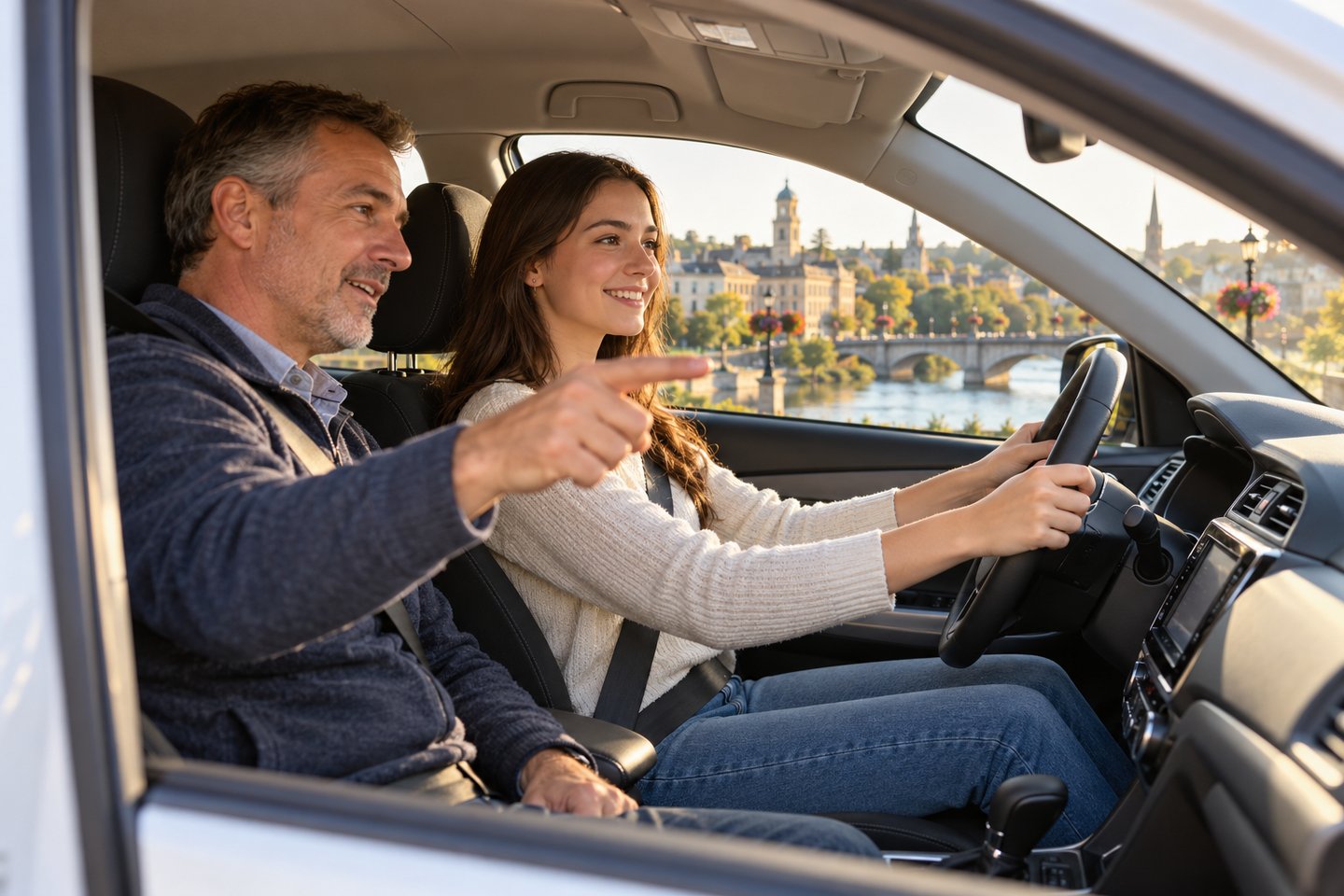
Learning Highway Driving in Cambridge: A New Driver's Guide to the 401
If you live in Cambridge, Highway 401 is never far away. It cuts right across the city, linking you to Kitchener, Guelph, Milton and Toronto, and sooner or later every new driver here has to learn to use it. For a lot of G2 drivers, the first merge onto the 401 is the most stressful moment of learning to drive. The good news is that freeway driving follows a clear set of steps, and once you know them and practise them in the right order, the 401 becomes one of the most predictable roads you'll drive.
Key takeaways
- G1 drivers may not drive on the 401 or other 400-series highways unless they are with an Ontario-certified driving instructor. G2 drivers can use all Ontario roads.
- Use the acceleration lane to match the speed of freeway traffic before you merge. Signal early and merge smoothly into a gap.
- When exiting, move into the deceleration lane first and only then slow down. If you miss your exit, never stop or reverse: take the next one.
- Keep right except to pass, and leave at least two to three seconds of space behind the vehicle ahead.
- The G road test includes expressway driving, and you must declare your recent highway experience before you take it.
Which Highways Will You Use When Learning to Drive in Cambridge?
The main one is Highway 401. Through Cambridge it has interchanges at King Street and Highway 8 on the west side, at Hespeler Road (Regional Road 24) in the middle of the city, and at Townline Road to the east. Highway 8 itself runs as a freeway between the 401 and the Conestoga Parkway in Kitchener, so many Cambridge drivers use it to get to Kitchener and Waterloo.
The Cambridge section of the 401 has changed a lot in recent years. A multi-year provincial project widened the highway, replaced the bridges at Hespeler Road and Franklin Boulevard, and rebuilt the Hespeler Road interchange. The widening between Highway 8 and Townline Road, to at least 10 lanes, was completed in December 2023. If you learned the route years ago, or a parent is describing the old layout, expect more lanes and different ramps today.
When Are You Allowed to Drive on the 401 as a New Driver?
With a G1 licence, Ontario does not allow you to drive on 400-series highways or high-speed expressways such as the 401, the QEW or the Gardiner Expressway. The one exception is when your accompanying driver is a driving instructor certified in Ontario: in that case you can drive on any road. The Conestoga Parkway in Kitchener-Waterloo is also on the province's list of freeways, so the same caution applies there.
Once you pass your G2 road test, you can drive on all Ontario roads, including the 401, without an experienced driver beside you. That freedom is exactly why it pays to build highway skills in a structured way, rather than figuring them out alone on your first solo trip to Toronto.
How Do You Merge onto the 401 from a Cambridge On-Ramp?
The Ontario Driver's Handbook describes a freeway entrance as two parts: the entrance ramp and the acceleration lane. Here is the sequence to practise:
- Check early. As soon as you can see freeway traffic coming from behind, check your mirrors and blind spot to find the space you'll move into.
- Signal. Turn on your signal as soon as freeway traffic can see you on the ramp.
- Build speed in the acceleration lane. The point of this lane is to reach the speed of freeway traffic before you merge. Merging too slowly is one of the most common and dangerous new-driver mistakes.
- Merge smoothly. Move gradually into the centre of the nearest lane. Time it so you don't end up beside another vehicle or in its blind spot.
- Cancel your signal once you've merged.
Drivers already on the freeway should move over when it's safe to leave room for merging traffic, but don't count on it. It's your job to find the gap.
What Should You Know About the Highway 8 and 401 Connection?
The Highway 8 freeway between Kitchener and Cambridge does not connect to the 401 in every direction at one interchange. Its direct ramps link eastbound Highway 8 with eastbound 401 (toward Toronto) and westbound 401 with westbound Highway 8 (toward Kitchener). Traffic heading west on the 401 toward London uses the King Street interchange instead.
For a new driver, the lesson is simple: read the overhead signs early and get into the correct lane well before the split. If you end up in the wrong lane, follow it and correct your route afterward. A late, sudden lane change near a ramp is far more dangerous than a few extra minutes of driving.
What Speed Should You Drive on the 401 Near Cambridge?
Always drive to the posted signs. In 2026 Ontario raised the limit from 100 km/h to 110 km/h on most of its 400-series highway network, including Highway 401 from Merlin Road to Highway 427, a stretch that takes in Cambridge. Construction zones and other sections can still be posted lower, so watch for signs. Stunt driving penalties still apply at 150 km/h on 110 km/h sections.
Driving too slowly is also a problem. The G road test guidance asks you to avoid both exceeding the limit and driving unreasonably slowly, and to hold a steady speed whenever you can. On a highway as wide as the 401 through Cambridge, the habits that matter most are:
- Keep right except to pass. Use the left lanes for passing, then move back over.
- Leave space. Keep at least two to three seconds behind the vehicle ahead, and more in rain, snow or heavy traffic.
- Give trucks room. Large vehicles block your view, so avoid driving behind them or sitting in their blind spots. On freeways with three or more lanes each way, large trucks generally can't use the far left lane.
- Change one lane at a time, with a mirror check, signal and shoulder check for each move.
How Do You Exit Safely at Hespeler Road or Townline Road?
A freeway exit has three parts: a deceleration lane, the exit ramp, and an intersection at the end with a stop sign, yield sign or traffic light. Signal before you reach the exit lane and move into it at the beginning, but don't slow down on the freeway. Once you're fully in the deceleration lane, reduce your speed gradually to the speed shown for the ramp.
Check your speedometer on the ramp. After several minutes at highway speed, 60 km/h can feel like a crawl, a trick of perception the Handbook calls velocitization. Be ready to stop at the end of the ramp, because Hespeler Road and Townline Road both feed into busy city traffic. And if you miss your exit, never stop or reverse on the freeway. Simply take the next exit and turn around.
How Does Highway Driving Fit into the G Road Test?
The G2 road test (your G1 exit test) focuses on basic skills like turns, stops, parallel parking and residential driving. The G road test (your G2 exit test) covers more advanced skills, including driving on expressways, merging on and off, keeping appropriate speed and space, and lane changes.
Before the G test, you must sign a Declaration of Highway Driving Experience. It asks how many times in the previous three months you have driven on a freeway or a highway with a speed limit of at least 80 km/h, and how long those trips usually were. The 401 and the Conestoga Parkway both count as freeways. If you don't have enough highway experience, the examiner must cancel the test and you lose 50 per cent of the prepaid fee. Regular practice on the 401 is the best way to avoid that.
How Should You Practise Highway Driving from Cambridge?
Build up in stages. Start with short hops at quieter times, such as joining the 401 at Hespeler Road and leaving at Townline Road, so you practise one merge and one exit with little time in between. Then move on to longer trips, the Highway 8 connection toward Kitchener, and eventually busier periods. Before you head out in winter, check road conditions on Ontario 511 (511on.ca).
If you want a certified instructor beside you for those first highway trips, our in-car driving lessons in Cambridge include real-traffic practice on local roads, including merging onto and exiting the 401. The freeway section of the Official MTO Driver's Handbook is also worth reviewing before your G road test.
Frequently Asked Questions
Can I drive on Highway 401 with a G1 licence?
Only if your accompanying driver is a driving instructor certified in Ontario. Otherwise, G1 drivers may not use 400-series highways or high-speed expressways such as the 401.
What is the speed limit on the 401 through Cambridge?
In 2026 Ontario raised the limit to 110 km/h on Highway 401 from Merlin Road to Highway 427, which includes Cambridge. Always follow the posted signs, since construction zones can be lower.
Should I slow down before I take a freeway exit?
No. Signal, move into the deceleration lane, and only then slow gradually to the posted ramp speed. Slowing on the freeway itself can cause rear-end collisions.
What should I do if I miss my exit on the 401?
Keep going and take the next exit. Never stop, back up or cross solid lines to reach an exit you've missed.
Does the G road test include highway driving?
Yes. The G road test includes expressway driving, such as merging on and off and lane changes, and you must declare your highway driving experience from the previous three months before the test.
Does the Conestoga Parkway count as highway experience?
Yes. The MTO Driver's Handbook lists the Conestoga Parkway among the freeways that count, along with Highway 401 and other 400-series highways.